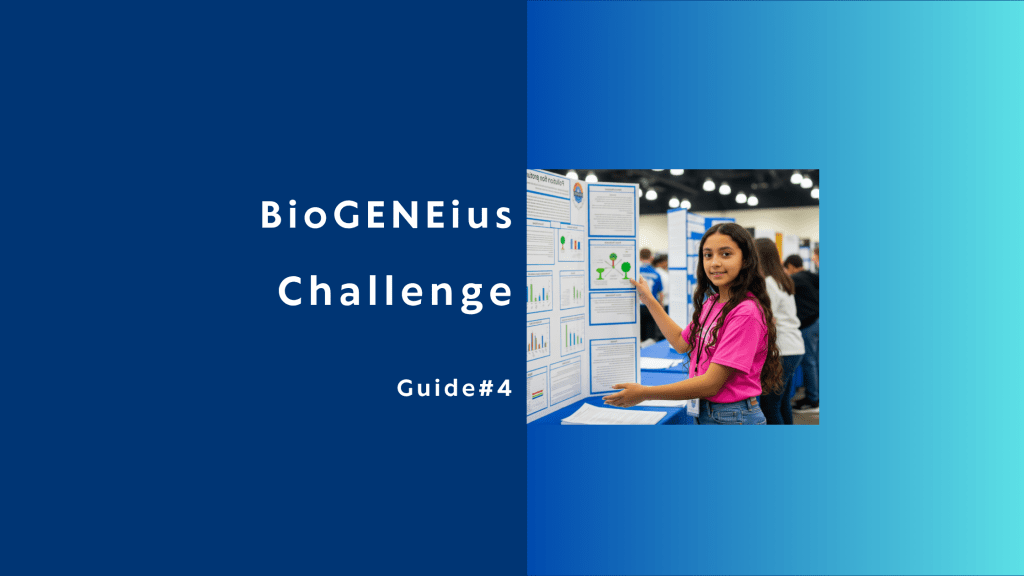
The BioGENEius Challenge is one of the most prestigious high school biotechnology competitions in the world. Organized by the Biotechnology Institute, this elite competition gives aspiring scientists a platform to present original research in fields like healthcare, agriculture, and environmental sustainability. For students aiming for top-tier colleges like MIT, Stanford, Harvard, or Johns Hopkins, participating in the BioGENEius Challenge can provide a major boost to their academic profile.
Whether you’re aiming to become a future biomedical engineer, biotech entrepreneur, or research scientist, this guide will walk you through how to prepare a standout BioGENEius project from start to finish.
What Is the BioGENEius Challenge?
The BioGENEius Challenge allows high school students to showcase original research projects in biotechnology at national and international levels. With categories focused on healthcare, sustainability, and the environment, it encourages innovation and real-world problem-solving using scientific principles.
How to Get Started with Your Project
The first step is identifying a real-world problem in biotechnology—something within healthcare, agriculture, or environmental science. Successful projects often:
- Propose novel solutions
- Present original insights
- Combine multiple disciplines (e.g., biology + data science)
Once you’ve chosen a topic:
- Find a Mentor: Reach out to research institutions, local universities, or science teachers.
- Design Your Project: Outline your research question, hypotheses, methodology, and expected outcomes.
- Document Everything: Keep a research log from day one. Judges value transparency and scientific rigor.
Recommended Resources for the BioGENEius Challenge
- Biotechnology Institute’s Official BioGENEius Page – Stay updated on eligibility, deadlines, and judging criteria.
- Application Portal – Submit your application and supporting documents here.
These resources are invaluable whether you’re just getting started or polishing your final presentation.
Time Management Strategies for High School Researchers
Balancing school, extracurriculars, and a major research project is no easy feat. Here’s a recommended project timeline:
1. Research and Planning (2–3 months):
- Choose your topic
- Conduct a literature review
- Design your experiment
2. Experimentation (3–4 months):
- Run trials
- Collect and analyze data
3. Documentation and Presentation (1–2 months):
- Write your research paper
- Design a scientific poster
- Practice presenting your findings
Weekly Commitment to Stand Out
To excel in the BioGENEius Challenge, consistency is key. We recommend:
- 10–15 hours per week devoted to your project
- Split time between reading, experimentation, writing, and practicing presentations
This level of dedication demonstrates the kind of intellectual commitment top colleges love to see.
Traits of Winning BioGENEius Participants
BioGENEius finalists tend to share several common characteristics:
- Deep knowledge of biotechnology concepts
- Creative thinking and original approaches to scientific problems
- Strong communication skills
- Thorough and organized documentation
- Perseverance in overcoming setbacks
Core Skills to Develop for the BioGENEius Challenge
Building these skills will not only improve your BioGENEius project but also prepare you for college-level STEM work:
- Scientific Research: Learn to formulate hypotheses and test them methodically.
- Data Analysis: Use tools like Excel, Python, or R to interpret your results.
- Technical Writing: Clearly explain your findings in a concise research paper.
- Presentation Skills: Develop a confident, clear way of communicating complex information.
- Time Management: Plan ahead and set micro-goals each week.
Why the BioGENEius Challenge Matters for College Admissions
Colleges like MIT, Stanford, and UC Berkeley seek out students who go beyond the classroom. Winning—or even participating in—the BioGENEius Challenge tells admissions officers that you:
- Are intellectually curious
- Can manage long-term projects
- Have real-world impact potential
It also opens doors to:
- Networking with academic and industry leaders
- Publication opportunities
- Research internships
Final Thoughts
The BioGENEius Challenge is more than a competition—it’s a launchpad for future scientists. If you’re a high school student passionate about STEM and biotechnology, this is your chance to shine. Start early, stay committed, and let your curiosity drive your research.
Want more help? Apply for Future Forward’s Research Mentoring program, by filling in the form below.
 Back
Back 
Leave a comment